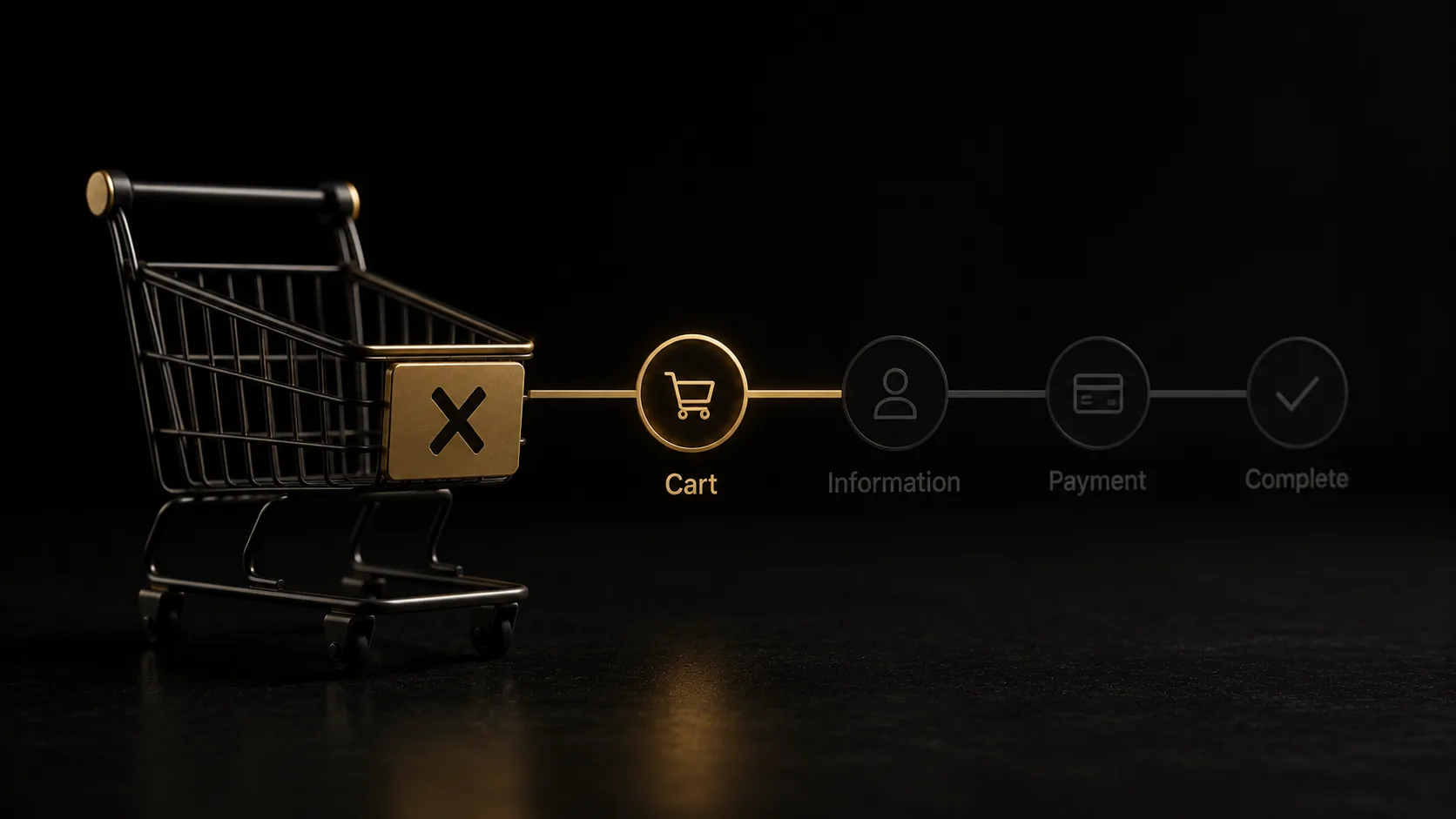
Seven out of ten carts, gone. That's the 2026 number — a 70.22% abandonment rate across online shopping. It's tempting to read that as "most people just aren't that serious about buying." The data says otherwise. Most of it is the checkout page's fault, and it fails in the same handful of ways, over and over.
This is the prevention side of the problem — what causes someone to leave a cart in the first place. (If you're past that and want to know what to do about the carts that already got abandoned, that's a separate question — recovery emails have their own benchmarks, and they're not this post.)
The Actual List, Ranked
Here's what shoppers report actually causing them to bail, most common first:
- Unexpected extra costs (48%): shipping, tax, or fees that only show up at the last step. The single biggest cause, by a wide margin.
- Broken discount codes (46%): a code that doesn't apply, doesn't stack, or throws an error is treated as a reason to leave, not a reason to just skip the discount.
- Mandatory account creation (26%): being forced to make an account before you're allowed to pay.
- A checkout that's too long or complicated (17%): and more than half of shoppers abandon if checkout takes longer than 30 seconds.
- Limited payment options (13%): no Apple Pay, no PayPal, no option other than typing in a card number by hand.
(These add up to more than 100% because most people cite more than one reason — Baymard's research and several 2026 studies confirm the same top five, in roughly the same order.)
The Mobile Problem Is Worse Than the Average Suggests
The overall 70% number hides a bigger gap underneath it: mobile abandonment runs around 80%, against roughly 66% on desktop. A checkout flow designed and tested on a laptop, then shrunk down for a phone, is usually where that 14-point gap comes from — tiny tap targets, autofill that doesn't trigger correctly, a form that requires zooming to read.
Notice what's not on the list: price. Buyers don't cite "it cost too much" anywhere near as often as they cite "the price I saw wasn't the price I paid." The complaint usually isn't the number — it's being surprised by it four screens after they'd already mentally agreed to buy.
What's Actually Fixable Here
Every item on that list above is a design or policy decision, not a customer-attitude problem. Showing full costs (shipping included) before the final page removes the #1 cause entirely. Offering guest checkout removes the #3 cause. A checkout under three steps addresses #4. None of these require discounting anything or convincing anyone of anything — they just require not surprising the person who already decided to buy.
That last part is worth sitting with. A shopper who added something to their cart already made the hard decision. Losing them at checkout isn't usually a persuasion failure — it's a process failure, arriving one step after persuasion already did its job. Which is a strange thing to lose a sale over, and a genuinely fixable one.