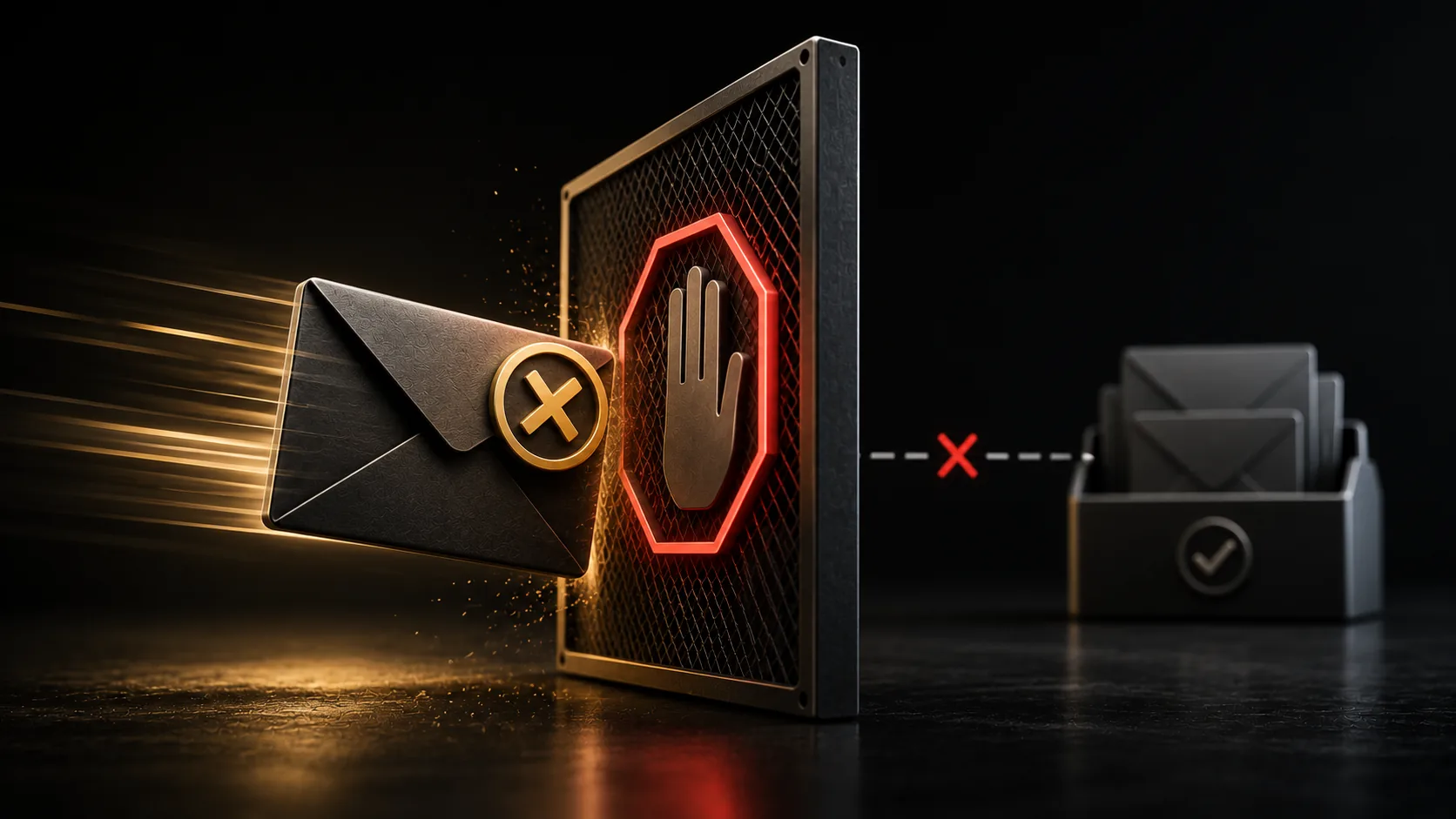
If your outbound email response rate quietly dropped to near-zero sometime in the last year or two and nothing about your list or your message actually changed, there's a decent chance the problem isn't your copy. It's that a growing share of your emails were never delivered anywhere at all — not even to spam, which at least used to give you a fighting chance.
What Actually Changed
Google, Yahoo, and (starting mid-2025) Microsoft all moved their bulk-sender requirements from guidance to enforcement. The thresholds: spam complaints have to stay under 0.3% (Microsoft's cutoff is stricter, at 0.2%), and bounce rates under 2%. Miss those, and mail doesn't get filtered — it gets rejected outright.
Authentication went from optional to mandatory in the same window. Without properly configured SPF, DKIM, and DMARC records, Gmail now permanently rejects the sender — not a spam-folder placement, a bounce. Microsoft requires full DMARC alignment for any sender pushing more than 1,000 emails a day to its domains. And RFC 8058 one-click unsubscribe is now required on all marketing mail, full stop.
The distinction matters more than it sounds: a spam-folder placement is a bad outcome you can sometimes recover from with better sending practices. A rejection means the message never reached the recipient's mail server at all. There's no subject line clever enough to fix that — it's a technical failure, not a copy failure.
Why Cold Outreach Specifically Got Harder
Spam filters have also gotten more sophisticated on the behavioral side. AI-driven filtering now weighs sender reputation, engagement patterns, and even linguistic markers — a message that reads as generic, templated, or low-engagement gets flagged more aggressively than an identical message would have three years ago. Cold email, by definition, starts with no prior relationship and often mediocre open rates — exactly the profile these systems are tuned to catch.
None of this is a ban on cold email. It's a much higher floor for technical hygiene before the message even gets evaluated on its own merits. A perfectly written cold email sent from a domain with no DMARC record, or from an account already flagged for a high bounce rate, doesn't fail because the writing was bad. It fails before anyone reads it.
What This Actually Means for a Small Business
If you're sending outbound email — sales prospecting, cold outreach, even a newsletter to a list that's grown a little stale — the checklist to actually clear before worrying about subject lines: SPF, DKIM, and DMARC all correctly configured (not "set up once in 2022," actually verified now); a genuine one-click unsubscribe link, not a mailto address pretending to be one; and a sending list clean enough to keep bounce and complaint rates under the enforced thresholds.
This is dry, unglamorous, entirely non-negotiable infrastructure — and it's also exactly the kind of thing that's invisible until it silently kills a channel that used to work. Worth checking before assuming your offer, your list, or your writing stopped working. Sometimes the message was fine. It just never left the building.