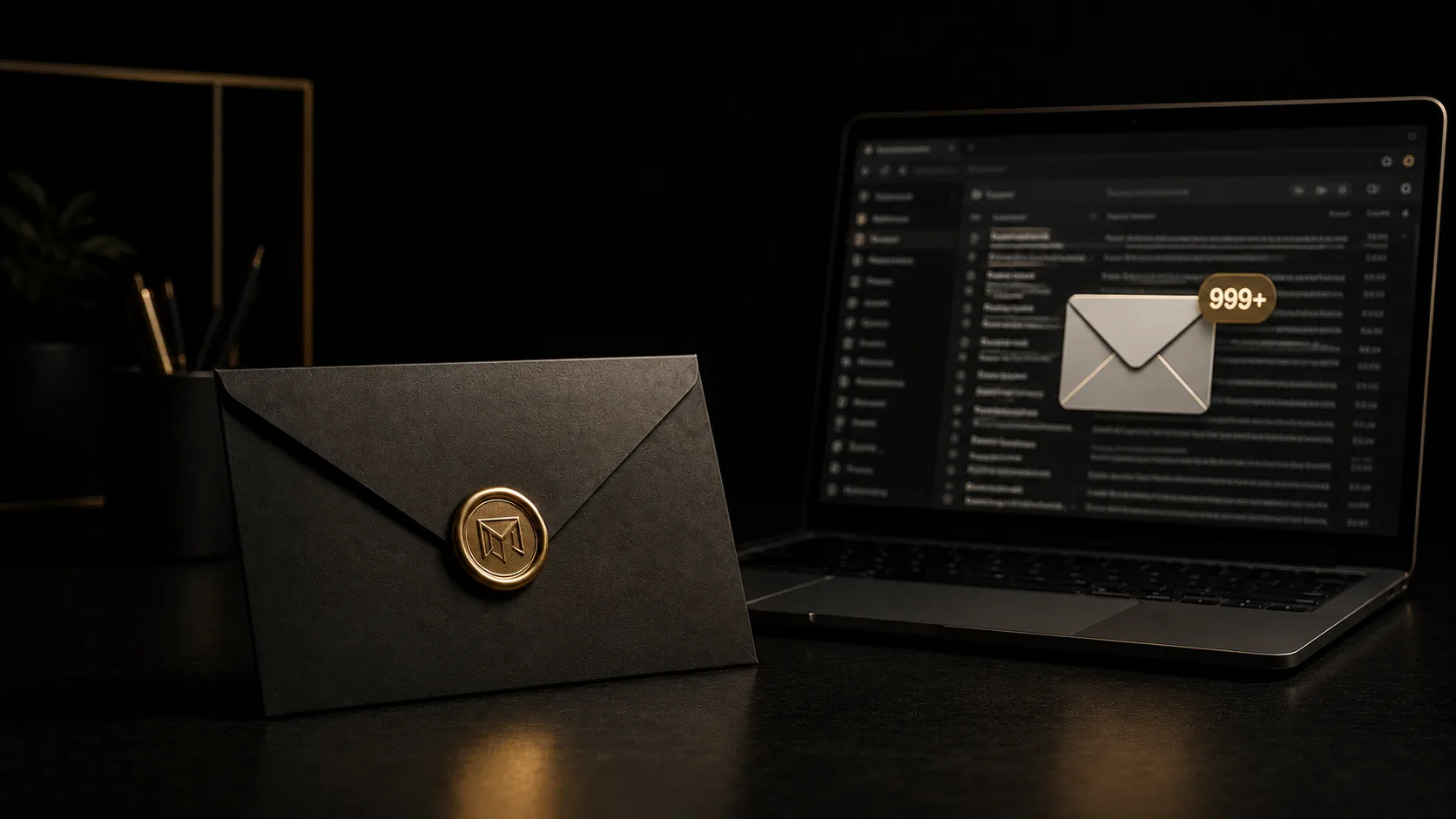
Direct mail has spent the better part of two decades being treated as the channel everyone assumed was dying. The 2026 data makes an oddly strong case for the opposite: it's the one B2B channel getting measurably better while every digital channel around it gets more crowded and less trusted.
The Numbers
84% of marketers now report direct mail delivers their highest ROI of any channel — up from 74% in 2023 and 67% in 2022. That's not a one-year blip; it's a three-year climb, in the same years every digital channel was supposedly winning by default.
69% of B2B marketers report increasing their direct mail budget this year, citing stronger engagement with decision-makers than email or LinkedIn outreach produces. And the response-rate gap is the part that actually explains the budget shift: B2B direct mail averages a 4.4% response rate on cold prospect lists, and 5–9% on house lists of existing contacts. Email response rates, for comparison, sit at 0.12–1%.
That's roughly a 5–40x response-rate gap, depending on the list. It's not that email stopped working entirely — it's that a decision-maker's inbox gets hundreds of pitches a week, while their actual mailbox gets almost none. Scarcity, not superiority, is doing most of the work here.
Why This Is Happening Now, Specifically
Two forces are compounding at once. First, inbox competition for attention has genuinely gotten worse — the same enforcement crackdown making cold email harder to deliver (see: Google, Yahoo, and Microsoft's 2026 sender rules) has also made every inbox that does receive mail more crowded with legitimate, authenticated senders all competing for the same handful of seconds of attention.
Second, 75% of marketers say direct mail is specifically the best channel to reach C-suite executives — a segment that's notoriously hard to reach through cold digital channels and whose assistants are often actively filtering email on their behalf, but who still open their own physical mail.
The format has also gotten more sophisticated. Over 48% of premium direct mail campaigns now include AR, NFC, or video integration — a physical piece that triggers a personalized digital experience when scanned, closing the gap between "feels premium" and "still trackable."
What This Means Practically
This isn't an argument to abandon email — at scale, digital still wins on cost per contact by a wide margin. It's an argument for matching the channel to the target. A $50,000 enterprise deal justifies a $5–15 mailed piece to twenty named decision-makers in a way that doesn't make sense for a $40 landing page order. The math that made direct mail feel wasteful for mass outreach is the same math that makes it look underused for a small, high-value target list.
Worth asking honestly: if your highest-value prospects are a short, well-defined list rather than a broad audience, is email genuinely the right tool, or is it just the cheapest and most familiar one? The 2026 data suggests those aren't the same question anymore.