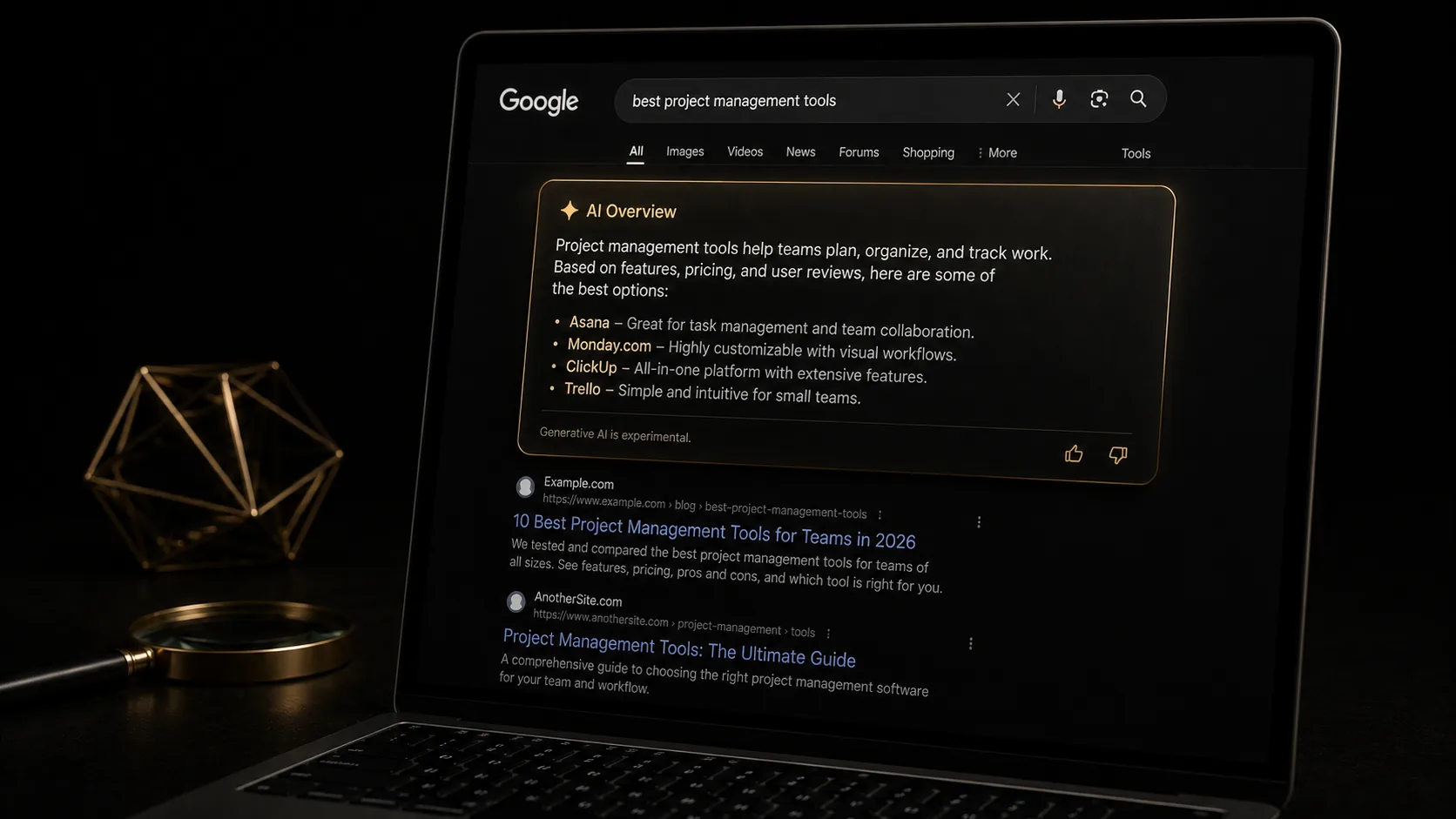
For most of SEO's history, the deal was simple: rank #1, get the click. That deal is quietly breaking apart, and the numbers are stark enough that "quietly" might be generous.
How Big the Shift Actually Is
AI Overviews now appear on somewhere between 47% and 64% of all Google queries, up from roughly 25–30% at their 2024 launch — with one March 2026 measurement putting it at 48%. And 60% of Google searches now end without a click at all, AI Overview or not.
The direct hit to ranking well: pages holding the #1 position see a 30–50% average CTR drop specifically on queries where an AI Overview appears. Sites that lean heavily on informational search traffic have reported 20–40% declines in organic sessions from those query types. Ranking #1 didn't stop mattering — it stopped being the whole story.
This isn't uniform across every industry. B2B technology content sees AI Overview exposure as high as 70% of relevant queries. Ecommerce sits at the opposite end, around 4%. If your business lives in B2B or SaaS content, this shift is close to unavoidable. If you're selling physical products through search, it's a smaller problem than the headlines suggest.
What Actually Gets Cited Inside an Overview
Here's the part that matters more than the traffic-loss numbers: Google's AI selects citations based on content structure, claim clarity, and what's increasingly called entity authority — not organic rank alone. A page ranking #7 with a clearly structured, directly stated claim can get cited over a #2 page that buries the same information in a wall of unstructured prose.
The practices showing up repeatedly in 2026 guidance on this: structured data markup that makes claims machine-parseable, content that states a specific fact or number in a single clear sentence rather than implying it across a paragraph, and building genuine topical authority on a subject rather than one-off posts scattered across unrelated topics. The industry shorthand for this is Generative Engine Optimization, or GEO — traditional SEO's cousin, aimed at a citation instead of a ranking position.
What This Means for What You Publish
The uncomfortable implication: a lot of the content strategy that worked for traditional SEO — broad keyword coverage, restating the same idea five different ways to capture variant search terms — is exactly what an AI system is least likely to cite, because it's the opposite of a clear, specific claim. Vague, hedge-everything content that used to rank fine on pure keyword density is now competing directly against a system optimized to summarize precisely that kind of content out of existence.
What tends to survive: original data (something that isn't a restatement of five other articles), claims specific enough to quote directly, and genuine depth on a narrow topic instead of shallow coverage of a broad one. Which is, not coincidentally, close to what made content worth reading in the first place — it's just no longer optional to also be worth citing.