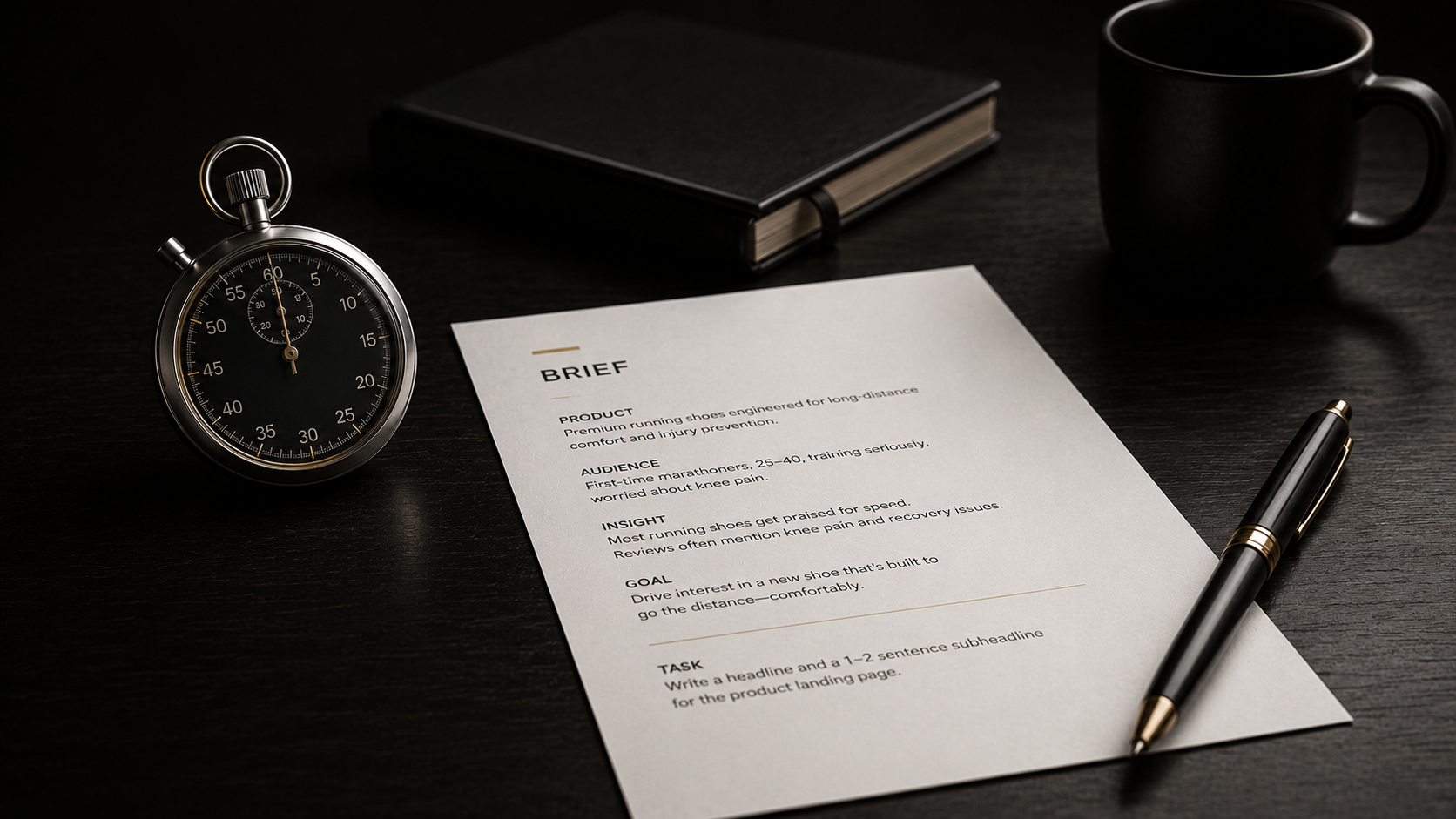
Portfolios show you a copywriter's best day. A test project shows you their normal one — how they think when the assignment is unfamiliar, how they handle a brief with gaps in it, whether they ask the right questions before diving in. If you're about to hand someone real budget, a short test is one of the highest-value hours you can spend before that happens.
What Makes a Good Test
A realistic scenario, not a generic prompt. Give a few paragraphs of context — a product, an audience, a specific goal — and enough room for the candidate to make their own creative and strategic calls. "Write a headline for a running shoe" tells you almost nothing. "Write a headline for a running shoe brand whose reviews keep mentioning knee pain from other shoes, targeting first-time marathoners" tells you a lot, because now you can see whether they used the detail you gave them or ignored it.
What to Actually Evaluate
Not just whether the copy sounds good — anyone can string together pleasant sentences. Look at whether they used the specific details in your brief, whether they can explain why they made the choices they made (structure, angle, word choice), and whether their questions before starting were sharp or generic. A candidate who asks "who's your competitor and what do your customers complain about most?" is thinking like a strategist. One who asks nothing and starts writing immediately usually is one too.
Ask the candidate to talk through their own submission afterward — why this headline, why this structure. The explanation often reveals more than the copy itself.
Keep It Short and Pay for It
A fair test takes an hour, not a weekend, and it's compensated. This isn't just good manners — a company that expects hours of free, speculative work before a hire decision is signaling something about how it'll treat that person's time after the hire, too. It's a two-way trust signal: a buyer who respects a candidate's time during evaluation tends to be a better client once real work starts, and a candidate who balks at a short, paid test raises its own question.
What This Doesn't Replace
A test evaluates craft and thinking on a small scale. It doesn't replace checking references, verifying past results, or asking about process and communication — those are different questions, covered in more depth in the questions worth asking before you hire. Think of the test as the final filter after the conversation, not a substitute for having one.