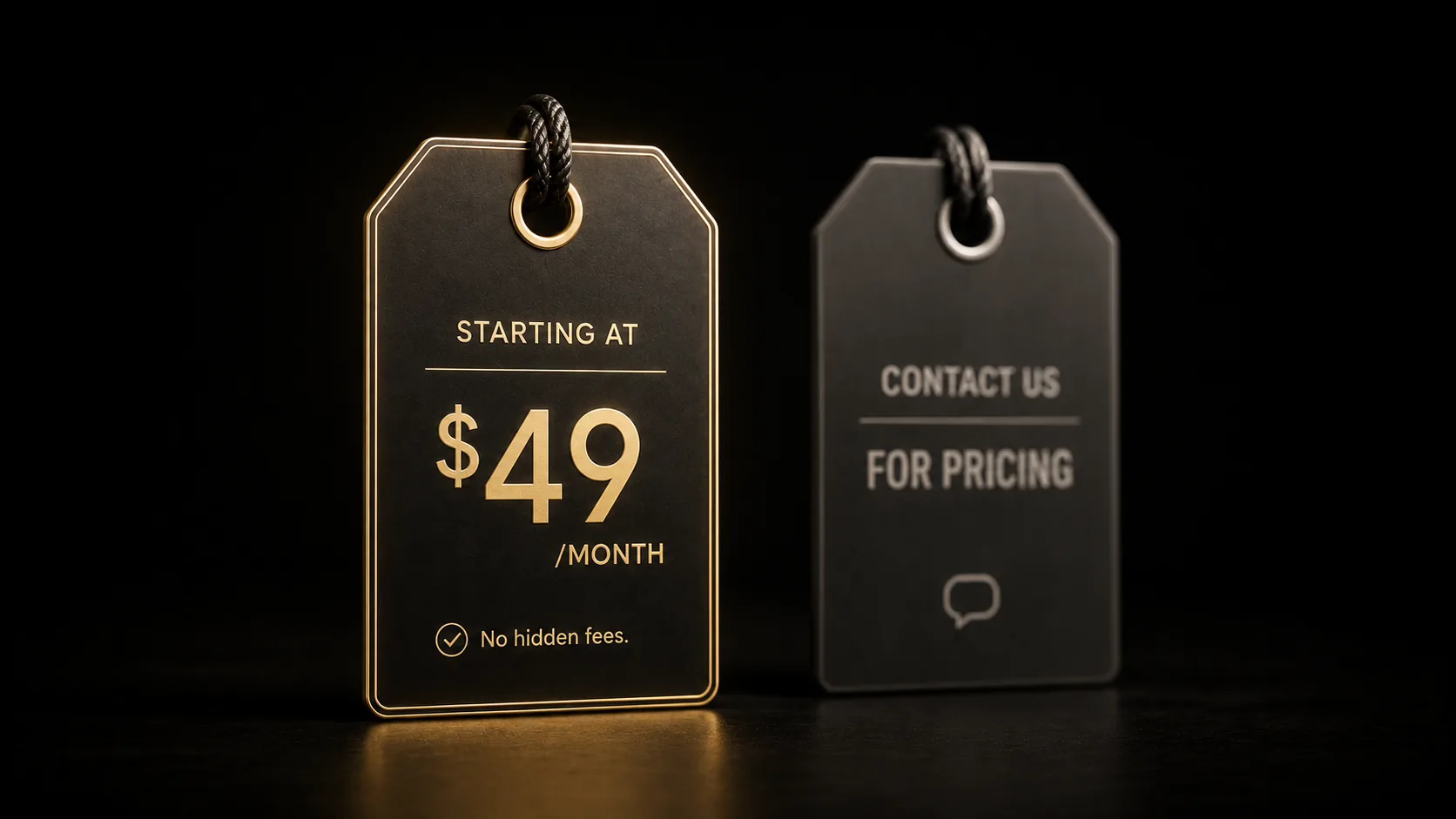
"Contact us for pricing" is one of those phrases that used to signal something — exclusivity, maybe, or a product complex enough that a real number couldn't be given upfront. In 2026, the data suggests it mostly signals one thing to a visitor: friction. And friction is the one thing a pricing page exists to remove.
What Transparency Actually Does to the Numbers
Businesses that show clear pricing instead of hiding it behind a "book a call" gate see lead form submissions improve 20–35%. That's not a small optimization — that's a meaningful share of visitors who would have left silently, converting instead, for no reason other than not being asked to talk to a salesperson before they even know if they're in the right price range.
There's a deeper shift underneath that number. A PwC Consumer Intelligence Series survey found that 66% of shoppers now rank transparency as the single most important trait a brand can have — ahead of price competitiveness, for the first time since the study began. Buyers aren't necessarily looking for the cheapest option. They're looking for the business that isn't making them work to find out.
Why "It Depends" Doesn't Read as Sophistication Anymore
There's a real reason some businesses avoid stating prices: genuine variance, based on scope, add-ons, or customization. That's a legitimate constraint, not a dodge, in plenty of industries.
But most "contact us for pricing" pages aren't hiding genuine complexity — they're hiding a range that could just be stated as a range. "Starting at $X" or a simple tiered table covers almost every legitimate complexity case without making the visitor do the work of requesting a quote just to find out if they're even in the right neighborhood, price-wise.
Unexpected costs revealed late in a buying flow cause roughly 48% of checkout abandonment in ecommerce specifically. The B2B version of the same problem is a discovery call that ends the moment a prospect finally hears the number and realizes it was three times what they budgeted for. Different setting, same root cause: the price should have come earlier.
What This Looks Like for a Service Business
For SaaS specifically, average lead conversion sits around 3–5%, while top performers reach 10–15% — and pricing presentation is repeatedly cited as one of the levers separating the two groups. Interactive elements help too: tooltips explaining what's included per tier, and a clear toggle between monthly and annual billing, both correlate with longer time on the pricing page and more confident tier selection.
None of this requires a business to compete on being the cheapest option. It requires being the easiest to evaluate quickly — which, per the 66% figure above, buyers are now weighing as heavily as the number itself.
If your pricing page currently ends in a form instead of a number, it's worth asking honestly whether that's protecting a genuinely complex quote, or just protecting the business from having to defend a number in writing. Those are two very different problems, and only one of them is solved by adding a sales call.