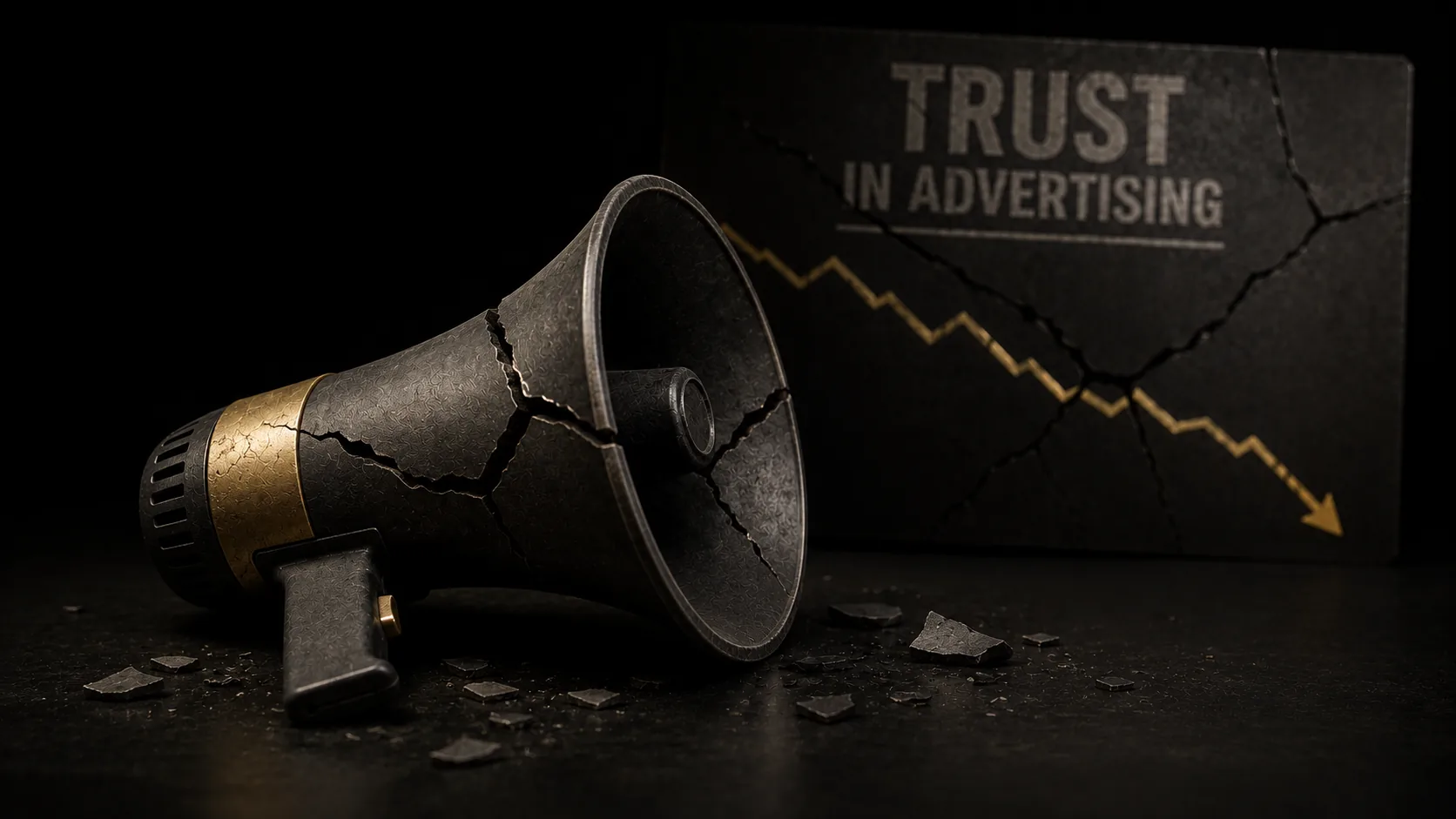
Marketing has always had a credibility problem in the abstract — "advertisers exaggerate" is not news. What's new in 2026 is how measured and specific the collapse has gotten, and how directly it now shows up in whether someone actually buys.
The Headline Numbers
The Edelman Brand Trust Barometer recorded that 86% of global consumers now refuse to buy from a brand they don't trust — up from 81% the year before. Gen Z shoppers show the sharpest version of this: 91% say the same thing. This isn't a soft preference anymore. It's a hard purchase gate, and it's getting harder every year measured.
Underneath that: 75% of consumers say they simply don't find traditional advertising credible. And in the same breath, 92% say they trust word-of-mouth referrals more than any advertising format that exists. The gap between "what a brand says about itself" and "what a customer says about a brand" has arguably never been wider.
The Gap Executives Don't See
Here's the number that should worry anyone running a marketing department more than any of the ones above: a PwC Consumer Intelligence Series survey found 82% of B2C executives believe their brand enjoys high consumer trust. Actual consumer agreement with that belief: 49%. That's the largest divergence PwC has recorded since the study began in 2019 — a genuine, documented blind spot between how brands see themselves and how their customers actually see them.
66% of shoppers now rank transparency as the single most important trait a brand can have — ahead of price competitiveness, for the first time in the study's history. And 82% of consumers say they trust customer-created content more than anything a brand creates about itself. Read together, these numbers describe the same shift from two different angles: buyers have stopped taking a brand's word for it, on almost everything.
Why This Is Happening Now
Several forces are compounding at once, and none of them are going to reverse. AI-generated content has made "polished and confident-sounding" nearly free to produce, which has quietly devalued polish itself as a trust signal — it no longer implies a real person or a real budget stood behind a claim. Fake reviews are estimated to have cost consumers $770 billion in a single year. And even AI search itself isn't immune: 63% of US adults say ads showing up inside AI search results would make them trust those results less, which suggests the erosion isn't really about any one channel — it's about the presence of a sales motive, wherever it shows up.
What Actually Still Works Inside This
None of this means persuasion stopped working. It means the kind of claim that earns belief has narrowed. A specific, checkable fact still lands. A customer's own words, quoted rather than paraphrased, still land — arguably harder than ever, given the 82%-trust-customer-content number above. A guarantee with a real, statable mechanism behind it still moves people, per the guarantee-conversion data elsewhere on this blog.
What's stopped working is the thing that used to be marketing's default mode: a confident, unverifiable claim about how good something is. That format isn't just less effective now — the data suggests it's actively read as a reason to leave. The businesses navigating this well aren't the ones writing more confidently. They're the ones who switched to writing more checkably — showing the evidence instead of asserting the conclusion, and letting the reader do the concluding themselves.