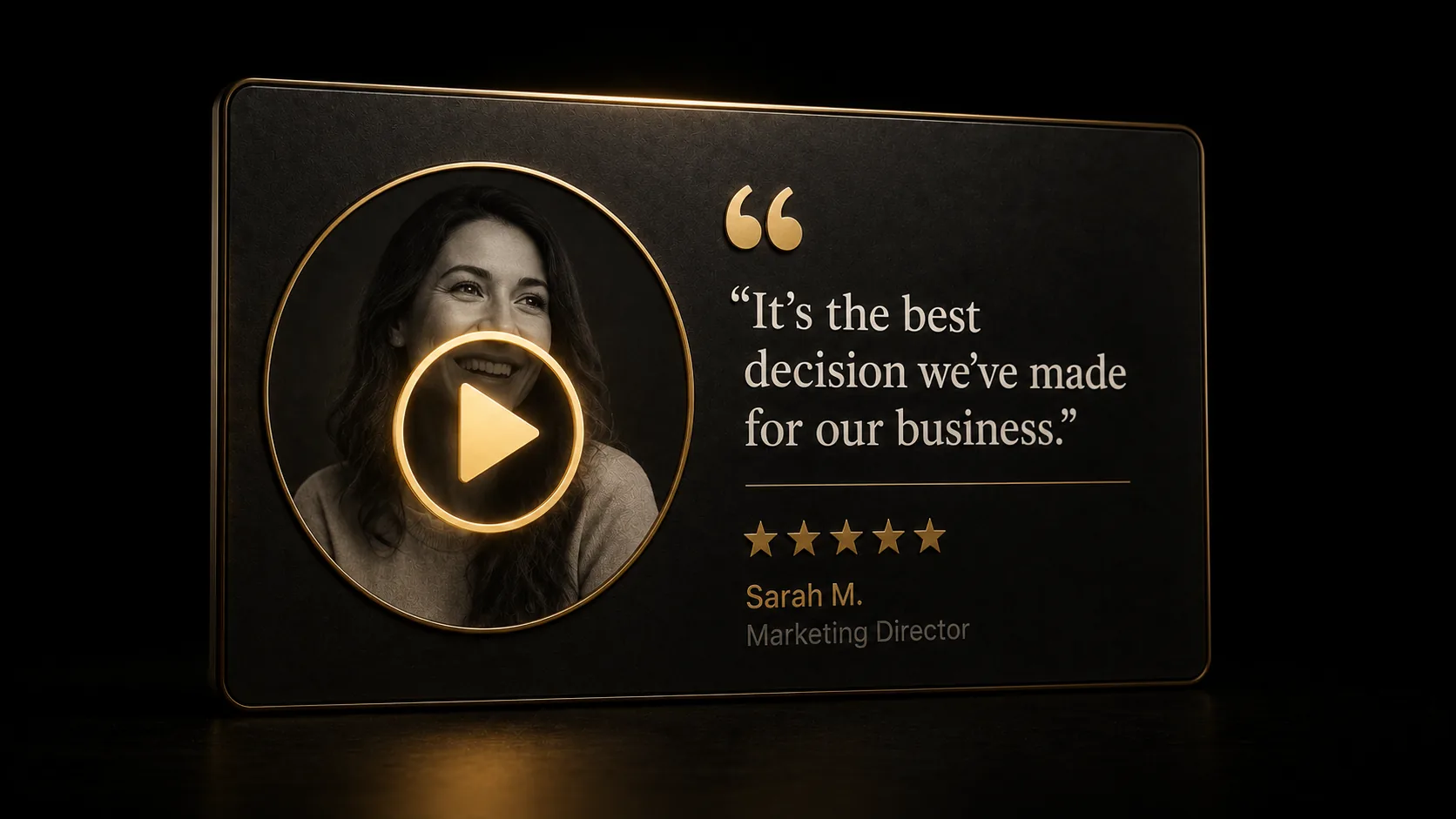
Text testimonials are cheap, easy to collect, and easy to arrange on a page. Video testimonials are none of those things — they require someone willing to be on camera, a bit of editing, and patience. The data makes an unusually strong case that the extra effort is worth it anyway.
The Trust Gap
78% of consumers say they trust video testimonials more than text reviews. 90% consider video testimonials more dependable than a company's own self-promotional claims about itself. And 72% of customers say they trust a brand more after seeing a positive video testimonial specifically.
Part of this comes down to something simple: memory. People retain roughly 95% of a video message, compared to about 10% of the same information in written text. A glowing paragraph gets skimmed and forgotten. A face, a voice, and a specific detail said out loud tends to stick.
The Conversion Numbers
Landing pages featuring video testimonials convert up to 80% higher than pages relying on text reviews alone. 79% of consumers say they're more likely to buy after watching one. This isn't a marginal optimization — it's one of the larger single-element lifts found anywhere in conversion research.
The honest caveat: some sources now claim AI-generated testimonial videos lift conversion by roughly 45% compared to text. Read that carefully. A synthetic "customer" reading a script is the video equivalent of a fake written review — and reviews of that kind sit in the same trust category the FTC now actively enforces against. The 78–90% trust numbers above describe how people respond to a testimonial they believe is real. That trust evaporates the moment it isn't.
What Actually Makes a Video Testimonial Work
The advantage isn't production value — it's specificity and visible authenticity. A customer stating one concrete detail (a number, a moment, a specific thing that changed) on camera, imperfectly, outperforms a polished, script-read version every time this has been tested. The slight awkwardness of a real person talking is part of what makes it believable.
Practically, that means the bar for collecting one is lower than most businesses assume. A 60-second phone recording of a real customer answering "what actually changed after you started using this" beats a professionally lit, scripted version of the same story — because the viewer can tell the difference between someone remembering something true and someone reciting something written for them.
If you're choosing where to spend limited effort between collecting video versus text testimonials, the data is fairly one-sided. If you're tempted by an AI shortcut to skip the collection step entirely, the data on trust erosion once a fake is discovered says that's a worse trade than it looks.